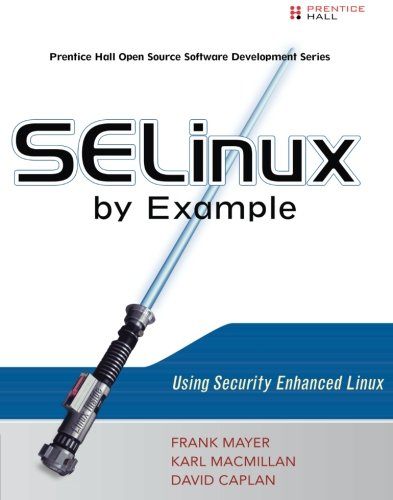
SELinux by Example: Using Security Enhanced Linux eBook includes PDF, ePub and Kindle version
by Frank Mayer, Karl MacMillan, David Caplan
Category: Book
Binding: Click the Shop Now button below
Author:
Number of Pages: Click the Shop Now button below for more updates
Price : Click the Shop Now button below for more updates
Lowest Price : Click the Shop Now button below for more updates
Total Offers : Click the Shop Now button below for more updates
Asin : 0131963694
Rating: Click the Shop Now button below for more detail and update information
Total Reviews: Click the Shop Now button below for more details
Best eBook, Book, Pdf and ePub Collection on Amazon
Click the Shop Now button below eBook includes PDF, ePub and Kindle version
DOWNLOAD FREE BOOK COLLECTION
Interesting video collection click here Top 7 Zone
The best collection on pinterest Click Here Pinterest Collection
Results SELinux by Example: Using Security Enhanced Linux
SELinux by Example Using Security Enhanced Linux InformIT ~ eBook Watermarked SELinux Bring WorldClass Security to Any Linux Environment SELinux offers LinuxUNIX integrators administrators and developers a stateoftheart platform for building and maintaining highly secure solutions Now that SELinux is included in the Linux 26 kernel—and delivered by default in Fedora Core
SecurityEnhanced Linux Official Site ~ What is SELinux SELinux is a security enhancement to Linux which allows users and administrators more control over access control Access can be constrained on such variables as which users and applications can access which resources These resources may take the form of files Standard Linux access controls
SELinux by Example Using Security Enhanced Linux Book ~ SELinux by Example is the first complete handson guide to using SELinux in production environments Authored by three leading SELinux researchers and developers it illuminates every facet of working with SELinux from its architecture and security object model to its policy language
Book review SELinux by Example Using Security Enhanced Linux ~ Book review SELinux by Example Using Security Enhanced Linux last updated November 9 2006 in Categories Book Review Linux If you are serious about Linux security you should have this book
prosodyselinux Security Enhanced Linux Policy for the ~ SecurityEnhanced Linux secures the prosody processes via flexible mandatory access control The prosody processes execute with the prosodyt SELinux type You can check if you have these processes running by executing the ps command with the Z qualifier
SELinux by Example Using Security Enhanced Linux ~ SELinux by Example Using Security Enhanced Linux Now that SELinux is included in the Linux 26 kernel—and delivered by default in Fedora Core Red Hat Enterprise Linux and other major distributions—it’s easier than ever to take advantage of its benefits
SecurityEnhanced Linux ~ SecurityEnhanced Linux SELinux is an implementation of a mandatory access control mechanism in the Linux kernel checking for allowed operations after standard discretionary access controls are checked It was created by the National Security Agency and can enforce rules on files and processes in a Linux system and on their actions based on defined policy
Chapter 2 Introduction Red Hat Customer Portal ~ Chapter 2 Introduction SecurityEnhanced Linux SELinux is an implementation of a mandatory access control mechanism in the Linux kernel checking for allowed operations after standard discretionary access controls are checked SELinux can enforce rules on files and processes in a Linux system and on their actions based on defined policies
Chapter 3 SELinux Contexts Red Hat Customer Portal ~ Chapter 3 SELinux Contexts When running SELinux all of this information is used to make access control decisions In Red Hat Enterprise Linux SELinux provides a combination of RoleBased Access Control RBAC Type Enforcement TE and optionally MultiLevel Security MLS
SecurityEnhanced Linux Wikipedia ~ SecurityEnhanced Linux SELinux is a set of kernel modifications and userspace tools that have been added to various Linux distributions Its architecture strives to separate enforcement of security decisions from the security policy itself and streamlines the amount of software involved with security policy enforcement
Post a Comment
Post a Comment